Call
800 224 7978
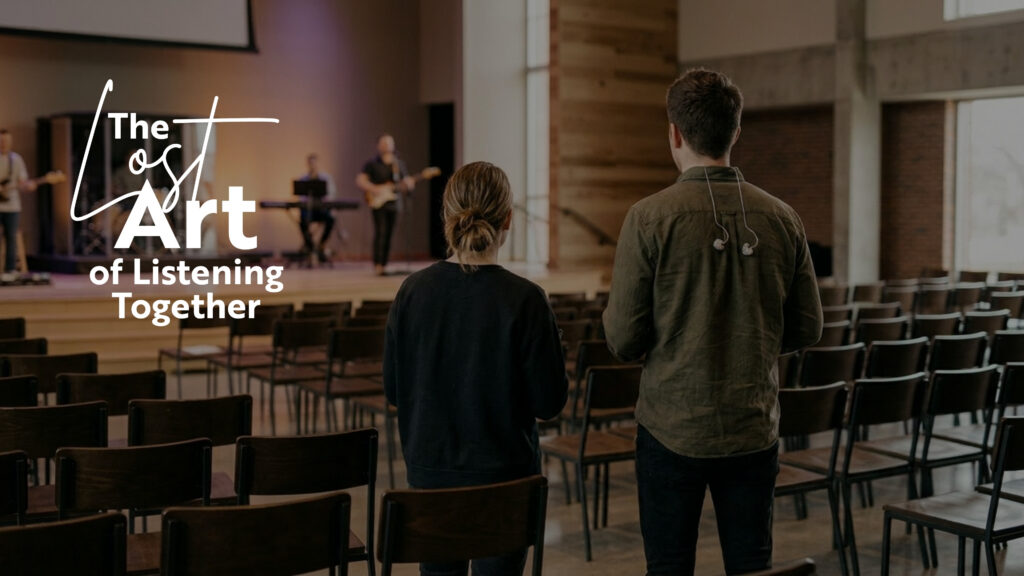
When did your worship leader last walk off stage during rehearsal, stand somewhere in the middle of the room, pull out their IEMs, and just listen? Not to their personal mix. To what the congregation is actually going to hear on Sunday.
If that question gives you pause, you’re not alone. And it’s worth talking about.
This isn’t a conversation about gear. It’s about people — and specifically, about the relationship between worship leaders and mix engineers that a lot of churches have quietly let slip away.
If you’ve been around church production for a while, you probably know exactly what this looks like.
There was a time when worship leaders were genuinely involved in the mix. They’d come off stage during rehearsal, walk around the room, and give real feedback. The guitars are a little harsh. I can barely hear the keys. The vocals feel buried. It was musical, useful feedback from someone who knew the songs inside and out — and the engineer and worship leader were doing it together. Back and forth. A collaboration.
Then, in-ear monitors became the standard. And IEMs are genuinely great — a real improvement for musicians on stage. But something happened as a side effect that nobody really talked about.
Worship leaders stopped walking the room. Because why would you? Your mix is in your ears. You can hear everything you need. So you stay on stage. And the mix engineer — who used to get feedback from the most musical person in the building — is now largely on their own.
On top of that, the tools available to engineers have exploded. More plugins than anyone could ever use. More ways to shape and sculpt the sound. Which sounds great — but it’s easy to get so deep into the technical side that the room gets forgotten entirely. Musicianship takes a back seat. Listening takes a back seat. And the relationship between the worship leader and the engineer quietly disappears.
If Sunday sounds decent, who cares, right?
Here’s the thing. The worship leader and the mix engineer are both shaping the worship experience every single week. The worship leader has the vision — they know what the set is supposed to feel like, what emotional arc they’re building, what they’re trying to create for the congregation. The engineer has the tools to make that actually land in the room.
But if those two people have never really talked about it — if they don’t share a vision for what worship is supposed to sound like at your specific church — you’ve got two people working in parallel, hoping it works out. Sometimes it does. But often there’s an invisible tension nobody can quite name.
And it doesn’t stop there. Pastoral leadership, elder boards, and anyone else with a stake in the direction of worship at your church often have opinions about volume, energy, and accessibility — and a lot of times the tech team finds out about those opinions through a complaint after the fact. That’s a problem a conversation could have prevented.
It doesn’t have to be every rehearsal. Even once a month, have them pull their IEMs out, walk to the back, and listen for ten minutes. Then talk about what they heard. This is a low-effort habit that changes the dynamic completely. The engineer gets feedback. The worship leader reconnects with what the congregation is experiencing. Everybody wins.
Engineers and worship leaders sometimes speak completely different languages. An engineer says, “There’s a build-up around 300 hertz.” A worship leader says, “It feels muddy and heavy.” They might be describing the exact same thing and not even know it. Spend some time translating. Figure out what each other means. It doesn’t have to be formal — just talk.
Go to your pastoral team — whoever makes decisions at your church — and proactively ask what Sunday morning should sound like. What’s the right level for your congregation? Get it on the table, write it down, and make it a reference point you can all come back to. Because if you don’t have that conversation, the first time it happens is when someone complains. And that’s a much harder conversation.
Five minutes. That’s all. What worked? What didn’t? Did anything feel off? Did people say anything? This is how you build a culture where the team is actually growing together instead of just surviving the weekend.
If you’ve been spending more time watching plugin tutorials than actually listening to music, playing an instrument, or developing your ear, notice that. The best engineers hear the song first and the signal second. That’s worth protecting.
The best-sounding rooms we’ve ever walked into weren’t necessarily the rooms with the best gear. They were rooms where the team actually trusted each other. Where the worship leader and the engineer were genuinely on the same page — about what they were trying to create, and who they were creating it for.
And that doesn’t cost anything. It just takes a conversation. Probably a few conversations.
If this resonated with you, consider sharing it with your worship leader and mix engineer and reading it together. Because the conversation that follows is kind of the whole point.
And if your church ever wants a fresh perspective on your audio setup or is looking for deeper team training, that’s what we do at CCI Solutions. We’d love to help.
Get in touch at ccisolutions.com or call us at (800) 224-7978.